Distribution built around continuous movement.
Keystone Logistics supports the distribution of oil and liquid commodities through coordinated pipeline transportation arrangements and strategic partnerships. The objective is to connect supply with destination through dependable, controlled and efficiently managed movement.
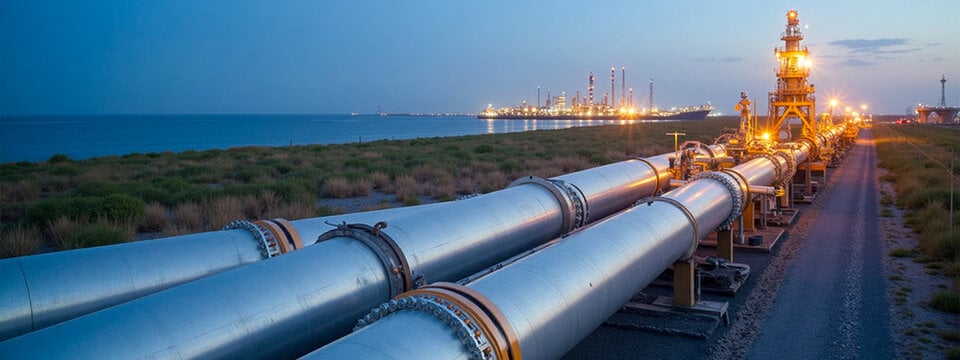
Moving commodities beyond the terminal.
A pipeline is more than a route.
Pipeline transportation provides a direct and dependable means of moving compatible commodities between connected points within an energy logistics network.
For Keystone Logistics, pipeline distribution forms part of the broader logistics capability surrounding the movement of commodities from receiving locations toward their intended destinations.
Through strategic partnerships and coordinated transportation arrangements, Keystone seeks to strengthen the continuity between terminal activity and downstream distribution requirements.
Designed for movement without unnecessary interruption.
Pipeline transportation is fundamentally different from road or marine movement. Once the required connections are established, commodity movement can take place through a continuous transportation interface.
Supply
Commodity enters the distribution network.
Transfer
Movement is coordinated through the applicable pipeline connection.
Movement
Commodity progresses toward its intended destination.
Delivery
The transportation interface connects with the next logistics stage.
The value of pipeline transportation is in its continuity.
Consistent commodity movement
Pipeline transportation can provide a continuous movement interface for suitable commodities, supporting distribution requirements without the repeated handling associated with some alternative transportation modes.
Aligned transportation planning
Effective pipeline distribution depends on coordination between the commodity source, receiving arrangements, transportation schedules and destination requirements.
Managed movement
Pipeline transportation requires disciplined operating practices, appropriate controls and attention to the conditions governing the movement of the commodity.
Connection beyond the terminal
Pipeline distribution helps connect terminal activities with downstream logistics requirements, supporting the next stage of a commodity's journey.
Extending distribution capability through strategic relationships.
Keystone Logistics is an oil storage company that works with strategic partners to enhance the logistics capabilities available to its customers. Pipeline transportation can form an important part of those connected arrangements where suitable infrastructure and commercial requirements exist.
Strategic partnerships can provide access to complementary transportation infrastructure and distribution capabilities, allowing commodity movements to connect more efficiently with the wider energy logistics network.
From terminal interface to destination.
Keystone Logistics supports the distribution of commodities through coordinated pipeline transportation arrangements designed to connect terminal activity with the broader requirements of the energy supply chain.